Wednesday, August 13, 2014

Queen Mary's Doll House


Queen Mary's Doll House. This dollhouse, housed at Windsor Castle in 
London, England is the most elaborate miniature every built. King 
George V presented this house to Queen Mary in 1924, as a gift from 
the people of England to show future generations how English royalty 
lived in the early twentieth century.
The writer of a two official volume history of the house wrote: "If 
we suppose that the present house lasts one for say, two hundred 
years, the little mansion which seems positively the last word in 
convenience and beauty …our successors will look at it in 
astonishment, and wonder that men could have ever designed to live in 
so laborious and cumbrous way…but at the same time, how they will 
value the house as an historical document."
Princess Marie Louise was the first person to approach the idea of 
creating such a masterpiece. She took her idea to one of the top 
architects in England in that day, Sir Edwin Lutyens. Sir Edwin 
immediately was caught up with the idea, he immediately began to 
design a house that would: `be fit for a Queen". No expense or 
amount of work was spared. He designed and with the help of the 
finest artisans and designers of the day he began to design and build 
a fully furnished miniature home that was accurate to items found at 
Windsor Castle down to the finest minute detail even being fully 
electrified. Each item in miniature worked just like the like item 
at Windsor Castle. 
The house built at 1:12 scale and nearly three and a half foot tall 
and contains 40 rooms. Sir Edwin employed many artists and artisans 
to work on the interior. The design, art and detail of this house 
make it one of the most impressive miniatures ever created. He hired 
electricians to make sure every light and chandelier worked, plumbers 
to make each minute toilet flush, crafters to make sure the two 
elevators stop at each and every floor individually. He hired 
furniture craftsmen to duplicate the furniture found at Windsor and 
copy its finest minute detail. There was a 1/12th scale gramophone 
made and small records especially produced to play on it. 
An exact copy was made of the Masters Voice Cabinet It measures 
four inches high. The cabinet and motor took four months to complete 
and was complete in every detail down to the gold plating. Even the 
HMV logo was hand printed by Barraud, the artist that created 
the "His Master's Voice" original. The hardest job in recreated the 
gramophone in miniature was recreating the tiny sound box to give the 
necessary amplification for the records to be played. Six records 
were made. These are smallest records that actually work in the 
world" being 1-5/16ths in diameter. One of the six records recorded 
by Peter Dawson was "GOD Save The King" was pressed and sold as a 
souvenir. The cover is an exact copy of the cover of the original 
twelve-inch record used by the gramophone company. This tiny record 
is very hard to find today. It can be played on a 78-RPM record 
player by placing two 78's under the tiny record on the spindle to 
build up the height.
The cupboards were stocked fully with canned goods had the same 
labels of the popular brands of the day. The closets were stocked 
with clothes like those in Windsor. A complete wine cellar was 
created with miniature bottles with labels like the one in the 
castle. Each little bottle contained about a thimbles worth of the 
actual wine listed on the label. Rugs, curtains, linens were all 
created to scale out of the same materials and fabrics as the 
originals. The bathrooms even had toilet paper.
No detail was overlooked. Royal Doulton and Wedgewood china graced 
the china closets. In the linen room among the linens is a Singer 
sewing machine. Over 170 writers were commissioned including Poet 
Laureate Robert Bridges, Rudyard Kipling, Thomas Hardy, and many 
other top writers and poets of the day to write stories for the 
leather bound miniature books in the library. The most well-know 
artists were used to supply art for the walls.
By the end of the project nearly 1500 people had been involved with 
the creation of this house. Queen Mary was very joyous when she 
first saw her gift. And asked that the house be shared with everyone 
so people could see and enjoy the beauty and genius of this house. 
The house first made its public appearance in 1924, at the British 
Empire Exhibition attracting over two million visitors before being 
placed at Windsor Castle where it remains today for all the see and 
enjoy. In its protected environment it remains in an excellent state 
of preservation. In a final Note to Sir Edwin Lutyens Queen Mary 
wrote: I, as the proud possessor of this house, can never be 
sufficiently grateful to you for having given so much of your time in 
order to give me pleasure".
Below are several web sites that have pictures of Queen Mary's 
Dollhouse.  It is hard to believe this is in miniature.

https://www.youtube.com/watch?v=y7YjePpdXVQ

http://www.royalcollection.org.uk/visit/windsorcastle/what-to-see-and-do/queen-marys-dolls-house

Sunday, August 10, 2014

American Doll House by Faith Bradford

The American doll house is the most popular exhibit at the Smithsonian in Washington.  It has 23 rooms and a very large family lives there.  The details are amazing and very enjoyable to look at.
This is a short film showing;

Faith Bradford's American Doll house.  Cut and paste the web address to a video on you tube.

https://www.youtube.com/watch?v=cBDhQTd-svQ


Friday, August 8, 2014

A Beautifully Furnished Dollhouse

Pipi Turner's dollhouse.  I ran across these beautiful doll houses on you tube.  I think they are outstanding.  If you have time while on you tube, look at the other outstanding dollhouses there.

This dollhouse took a little over 4 years to do starting from a kit.  Pipi has a small miniatures shop in Cologne, Germany.

https://www.youtube.com/watch?v=xNIIWoKtRYQ

Another of Pipi's dollhouses.  She has been working on this one for a year and a half.

https://www.youtube.com/watch?v=S9gCu5tO6bI

Thursday, August 7, 2014

My Doll House

The first doll house I am going to showcase is one I used to own.

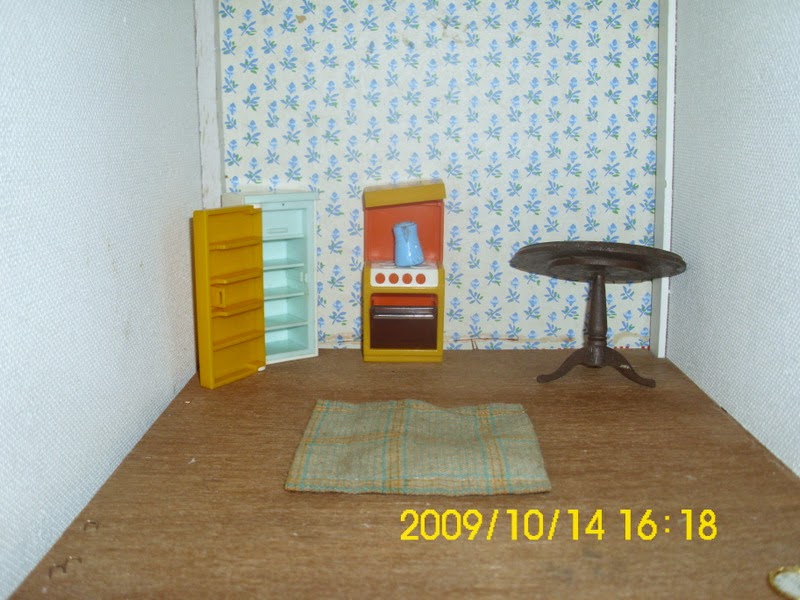
These are pictures of my doll house which I sadly no longer have.  As you can see it was a large doll house and I did not have room for it at the time.  I love doll houses and would love to have another.  Maybe  someday........


Wednesday, August 6, 2014

History of Doll Houses

This is the beginning of a large study of dolls houses.  I am beginning with the history of them,  I hope you learn and enjoy this information.  As I've always said the study of dolls is amazing.

History Of Doll Houses: Doll Houses were in the beginning toys for 
the very rich. The family would have a house built and furnished and 
the children were not really allowed to play with it, but to admire 
and study it. No one knows when the first dollhouse was built. 
Germany is credited with having many dollhouses in the seventeenth 
century. Most of the time the house was a replica of the home in 
which the family lived. These houses cost a lot of money and were 
only for the rich and privileged.
Dollhouses quickly gained favor through out Europe. By the nineteen 
century the dollhouse had become a mass-produced toy and children 
were actually allowed to pay with them as the middle class could now 
have the means to have them.
Today, there are thousands of dollhouses made each year and kits are 
sold to hobbyists to create very elaborate ones. Some of these 
dollhouses have become true works of art and are in many museums. It 
is the houses in the museums that I will mainly concentrate on for 
our study. I hope you find this subject as fascinating as I have.
In my research the houses were originally made in Europe..  America certainly has
many beautiful dolls houses also.

I found this history of dolls houses on the Boomini Doll House Manufacturer site.   I have found in my research of doll house history that it deals primarily with European doll houses.  But.. as you will see there are many beautiful and elaborate American dolls houses that are truly works of art.  I'm beginning with the older European dolls houses and will them study the ones in America.  This is such an extensive subject it cannot be covered completely.

The history of doll houses begins with the simplest patterns and ends with real works of art in which renowned artists and craftsmen were engaged. Due to relatively high construction costs, only the most affluent members of the patriciate could afford them. They used to be present at the royal courts, ducal palaces, and manors of rich aristocracy in Germany, France, the Netherlands, Italy and England. At present, old doll houses can be found in museums and private collections. They represent a 3-dimintonal document of the epoch’s culture - both material and spiritual.
A leading doll house manufacturing centre used to be Nuremberg. Miniature houses produced there were precisely constructed, with perfected details and sumptuous equipment, all of which, obviously, entailed high prices. Paris ranked second to Nuremberg in terms of doll house production. There, a lot of attention was put into both elegant finish and the dolls’ clothes which were supposed to match contemporary fashion trends. Many of the English doll houses which were once beloved by members of the royal court and rich aristocracy, may now be admired in various museums. Dutch cabinet doll houses (the so-called „poppenhuizen”) excelled doll houses from other countries in terms of their valuables. Richly decorated, they were equipped with valuable materials, such as ivory, silver and porcelain. They were usually a wedding present given by the groom to the bride and by mirroring the bride’s family estate, they were supposed to soothe bride’s homesickness. Craftsmen who made them were associated in a separate guild.
The hayday of doll houses was the period between the years 1700 and 1900. In the beginning, doll houses were not meant to be a toy but were miniature pieces of art performing various functions. Their major function was decorative and representative. Doll houses were most frequently true replicas as well as decorations of manors. Their equipment enchanted with skill and precision. They not only contained exact copies of real furniture, but also carpets, curtains, minature porcelain, silver dishes, ivory decorations, paintings by famous artists and books. A miniature version of a real manor house owned by the daughter of Prince of Bavaria Albrecht V housed miniature bottles with real wine in its tiny cellars. Later designs included electricity and sewage system as well. Doll houses performed a didactic function too. By observing the houses and their equipment, and later playing with them, kids acquired knowledge and prepared for their roles in adult lives. It may seem surprising, but in a house which the Princess of Saxony gave to her daughters in 1512, emphasis was placed on kitchen equipment. In other doll houses, on the other hand, one could find not only books but also maps, mini-globes or drawings presenting authentic historical buildings. Doll houses construed in this way are a tangible document of the epoch and the source of knowledge about culture and lifestyle of their owners.
The most famous doll house is an English Queen Mary’s house. It presents a 1:12 - scale Windsor castle and the equipment dates back to the 20’s of the 20th century. It was a present for Queen Mary’s birthday given to her by grateful subjects who wished to thank their queen for her attitude and dedication during WW1. The idea for building it originally came from Queen’s cousin Princess Marie Louise and the design was prepared by Sir Edwin Lutyen. The completion of this incredible miniature took four years. Its interiors enchant with precision and accuracy. The wall papers, carpets, curtains and furniture are exact copies of real castle equipment from the times of Queen Mary’s reign. The house contains contemporary paintings, 300 books by authors such as A. Conan Doyle, J. Conrad, R. Graves and others, a miniature gramophone playing God save the King, photo albums and many other items. Royal cars with petrol engines can be found in a garage nearby. Bathrooms contain tiny towels and cellars house bottles of real wine. The bathrooms are fully plumbed with hot and cold water; even the light fittings are working. 70 people were putting the house into life, among them: artists, craftsmen, sculptors, painters, writers and poets. It is now on display in Windor castle.
A bookcase-like cabinet doll house commissioned by Petronella de la Court in 1670 took nearly 20 years to build! It was ordered in 1670. Made of olive wood and divided into 11 parts, lavishly equipped, filled with rich trinkets, it contains 1,600 various objects: from 28 dolls through Dutch paintings, ivory bas-reliefs, sculptures, finely made clocks, or even a globe with a brass stand, to illustrated books with leather covers. The house used to be a pride of its first owner. At present, it is displayed at Utrecht Museum.
Doll houses were exclusive products, available merely for a limited number of people. Made with precision and consisting of top quality materials, they enchanted with accurate details and precise workmanship. They were pieces of art created by artists and talented craftsmen, completely transcending the dimention of common toys. They decorated, added prestige to the owners, educated and entertained.

Sunday, August 3, 2014

World's Most Popular Doll

I am always curious about dolls.  I thought I would like to know who is the most popular doll in the world.  I was sure I knew the answer. So I turned to google, the harbinger of knowledge.  And... I was right.  It is of course Barbie. Not only is she the most popular doll, but also the top toy in the world.  They have been manufactured by the hundreds of millions.  I am sure there are few little girls that have not heard of Barbie and owned at least one. I read recently that the sales of Barbie had fallen at least 15%.  It appears as though Barbies reign as the most popular doll is slowing down.  But Barbie has been at the top for over 55 years.  It will be interesting to see what the next most popular doll will be.  I am sure Barbie will reign at least for a few more years.  A phenomenal doll with a phenomenal reign in the top spot.  I have collected quite a few of these dolls through the years.  My favorites are the mod era from the late 1960's to the early 1980's.  I also have quite a few of the higher end Barbies for collectors and dutifully kept them  in boxes to as we were told to keep their value.  Several years ago I decided to debox them as I am a doll collector, not a box collector.  I took quite a while to get them out of their boxes as they are literally sewn and wired to the box.  Barbies that I had paid anywhere  from 39.99 to over a 100.00 dollars for were not attractive out of the \boxes as their full skirts were full only because they were sewn to the boxes and the real insult was some did not have undergarments.  Some of them are very good quality like the "Little Debbie" series and the Mackie Barbies.  I am sure they are others, but these are ones I owned and am familiar with.  Since I de-boxed my Barbies and saw how cheaply they had been done, I have never purchased another Barbie. Every Christmas I loved buying the new Christmas Barbie, but I have not bought one in many years. I love Barbie and the concept of a fashion doll I find intriging as we all like to dream of beautiful clothing and always dressing in the latest and most fashionable clothes.   I understand and love the concept of the cheap Barbie, so every little girl can own one with beautiful clothes, but to sell dolls at high prices for collectors without even underwear is heartbreaking.  I don't know if others have been disappointed like I was, but I no longer purchase them.  

Sunday, July 13, 2014

Japanese Friendship Dolls

This is a long posting on the Japanese Friendship dolls and you will have to go to older posts at the bottom of the page and go to the next page to read all of the information on these dolls.  I found them to be a very interesting subject and I hope you do also.